Why a Short Pause Can Change the Shape of a Busy Day
A short pause between tasks helps you mark one task as finished, choose a clear next action, and reduce mental carryover without adding a complicated ritual.

The common mistake on a busy day is treating the end of one task as the start of the next: close the document, open the inbox, and keep thinking about the document. A short pause between tasks gives that handoff a visible edge, so you can register what is next instead of switching on autopilot. It cannot add time to the day, but it can keep one task from quietly spilling into another.
Choose a pause that fits the transition
A useful pause is not a miniature vacation or a reward you have to earn. It is a deliberate gap in which you notice what just ended, what is beginning, and whether you are ready to switch. A demanding conversation may call for more room than a quick change between familiar chores.
Think of the pause as a doorway, not a destination. Stand up, close a notebook, take a sip of water, or look out a window before opening the next file. Choose an action simple enough to repeat without turning it into another task to manage.
Place a short pause between tasks at a real boundary
Look for a natural seam: after sending a difficult message, before joining a meeting, when you finish a page of focused work, or after putting away one household task. A pause at a boundary can give your attention room to catch up with your schedule. Stopping in the middle of a sentence or unresolved decision, by contrast, can make it harder to return.
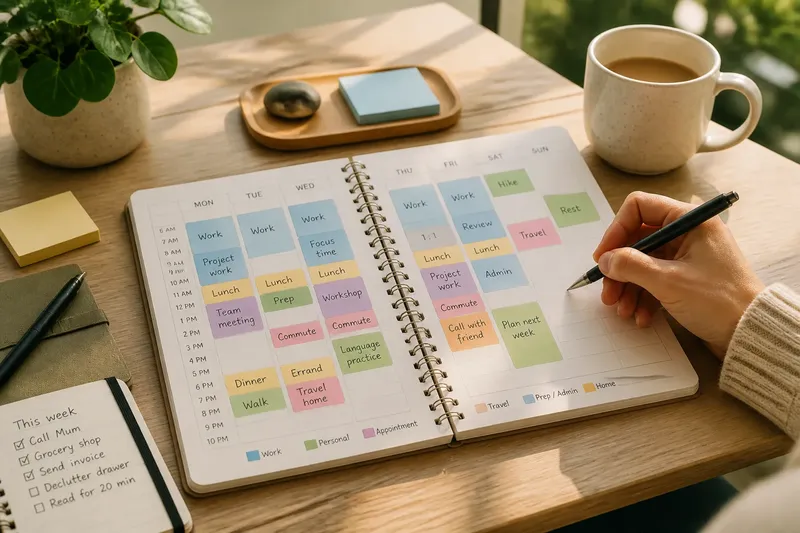
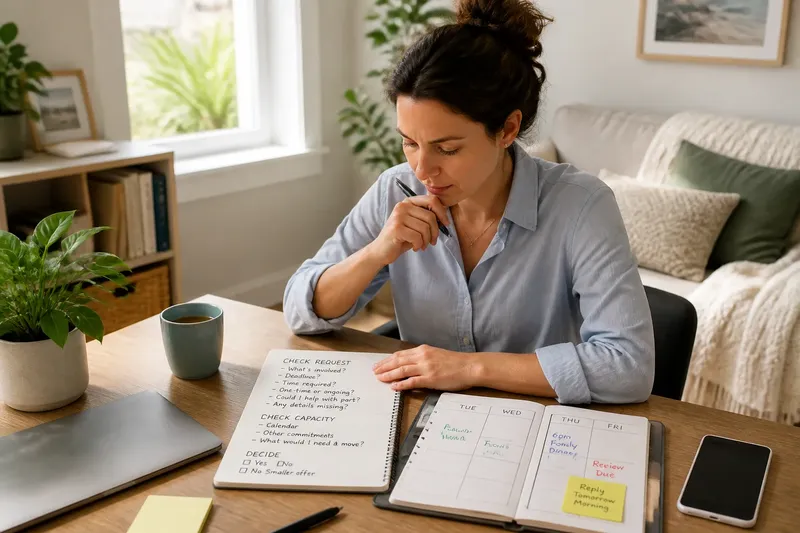
Before stepping away, leave yourself a return cue. Write the next action on a sticky note, leave the relevant page open, or add a brief note in a document. “Check the final paragraph for missing details” gives you a clearer starting point than “continue.”
Imagine you have finished drafting a message about a tense work issue and need to make a grocery list. You close the draft, write “reply after checking the dates” on a sticky note, and wash your hands before opening the notes app. The expected result is observable: the message has a clear next action, and the grocery list begins with its first item rather than the unfinished draft taking over your attention.
Match the pause to the situation
- After concentrated work: If your mind is holding several details, save the file and write the next action on a sticky note; if the task is already easy to resume, simply close the file and look away from the screen before switching.
- Before a conversation: If you are bringing urgency from solo work into a discussion, take a breath and name one thing you need to listen for; if you are already ready to focus, use a brief physical cue such as closing your notebook.
- Between routine chores: If a familiar chore has a clear ending, put the sponge down and rinse your hands; if the next chore still depends on an unfinished part of the first, finish that handoff before moving on.
- After an emotionally charged exchange: If you feel stirred up, step somewhere quieter and write one sentence about what needs attention later; if you are ready to continue, use a smaller cue such as drinking water and choosing the next action.
- When someone is waiting: If delaying would leave another person without needed information, make the essential handoff first; if no immediate response is needed, note when you will revisit the issue and pause at the next natural seam.
- When an interruption breaks your focus: If you can mark your place before responding, leave a note with the next action; if the interruption cannot wait, handle it and then reread the last line or cue before resuming.
These are options, not rules. A pause should fit the work and the people involved; it should not become a ritual that makes a crowded day harder to manage.
What helps a short pause between tasks work?
How long should a short pause be?
There is no fixed duration that suits every transition. Pause long enough to notice the task has ended and identify your next action; if you are still unsettled after a demanding exchange, take a fuller break when circumstances allow.
Should I use my phone during the pause?
Use your phone if it supports the transition, such as setting a reminder or checking the next meeting’s purpose. If opening it tends to pull you into messages or feeds, leave it aside and choose a physical cue instead.
What if the previous task keeps coming back to mind?
Capture the unfinished thought somewhere easy to revisit, along with its next concrete action if you know it. If someone needs a response, note when you will return to the matter rather than trying to settle it mentally while beginning unrelated work.
Can a pause help when I am interrupted?
Yes, though the pause may need to come after the interruption. Mark where you stopped if you can; once the interruption is handled, read your return cue before resuming.
Keep the transition small enough to use
A pause loses its usefulness if it becomes a performance: an elaborate breathing routine, lengthy journaling, or a demand to feel completely calm before continuing. The point is not to produce a particular mood. It is to notice the change and make a deliberate first move.
A transition pause is also different from needed rest. If you are depleted, hungry, or struggling to stay alert, a small doorway ritual may not address the problem. Take a proper break, eat, or seek support where you can instead of expecting one brief pause to meet every need.
To make a short pause between tasks practical, choose a recurring boundary, such as finishing a work block before opening email. Leave one visible cue and a return note, then notice whether the next task starts with less mental carryover. Keep the parts that help and change anything fussy; a useful pause leaves you with a clear next action, not another routine to maintain.